Insights

The Worth Of Words

So last week I talked about how books are both physical and an experience and it got me thinking about how everyone doesn't want to pay too much for e-books. To their thinking, there is no printing costs involved, no shipping, so the e-book should be practically free. It made me realize that the physical connection is no longer there, just the experience, and somehow that lacks value. Such as:

Say a publisher is offering a chapbook containing a story between 10,000 and 20,000 words. You'd pay about $5 for that, right? I mean, that sounds somewhat reasonable. And depending on the author, you might even pay more. Why? Well because it's something, isn't it? It's substantial. You can hold it in your hands, turn the pages, and then, once you're done, you can pass it along to someone else or let it sit and accumulate dust.

Now what if that same story was available only as an e-book?

You probably wouldn't even consider paying $5 or more, not unless it was by someone like Stephen King, and even then you might have reservations.

Why?

Well, I'm not completely sure. This all really boils down to the worth of words. It seems now in the digital age, potential e-book readers are becoming more concerned with file size and word count than the actual work.

For an example:

A writer friend of mine told me a story about how an e-book of his (a 10,000-worder) was priced at 99 cents. Someone purchased it, read it, and reviewed it favorably, even going so far as to recommend it ... but said she thought some readers might be upset having to pay 99 cents for so few words.

Huh?

Again: she thought some readers might be upset having to pay 99 cents for so few words.

E-book price points are all over the place these days. Some writers offer a 2,000-word story for 99 cents, while others offer 90,000-word novels for the same price. The e-book readers, I think, are becoming confused. Or are they? It's impossible to tell. But remember that little sale I had after Christmas, where I was offering my three e-books for 99 cents each? I decided to keep them at that price for the time being. The truth is they were hardly selling at $1.99. And I don't think $1.99 was too unreasonable, especially for The Silver Ring which, along with the bonus short story, comes in at about 20,000 words. But since I've kept the price at 99 cents sales have been better. For now at least.

So what does this all mean for the worth of words in the digital age? At this point, I don't know. It's more of a guessing game now than ever before. But I am curious to know what others think. How much does the price really matter when purchasing an e-book, and how much is too much ... and how much do you focus on the file size and word count?

Thoughts On Theft

For the sake of argument, let's all agree that stealing is wrong.

Only thing is, what exactly is stealing?

A simple definition would be taking something that's not yours, right? I guess. But think about this:

You walk into a bookstore, pull the Hint Fiction anthology off the shelf (or any other book), hide it in your jacket (for the sake of argument let's assume you're wearing a jacket. why? I don't know, maybe it's cold outside or raining. just go along with it, okay? sheesh), and then walk right out of the store.

So that would be stealing, yes? You took a physical item that did not belong to you and left the store without paying. Okay then. What about this:

You walk into a bookstore, pull the Hint Fiction anthology off the shelf, and begin reading it from front to back. It wouldn't take you very long, which is why I'm using it as an example. But if you'd like, say it's a comic book or some other book that's short enough to read in an hour or two. You read the entire thing, place it back on the shelf, and walk out of the store.

Now was that stealing?

Obviously nothing physical was stolen from the bookstore. What was stolen was the experience of the book. If that makes sense. Listen, I'm not saying that necessarily is stealing, but with the recent hoopla about e-book readers and how writers are going to have their books stolen (blah blah blah) it made me realize that a book or story isn't so much an object as it is an experience. If someone wants to go into the bookstore and read the entire anthology, that's fine by me. Nothing I can do about it anyway. Sort of like people loaning books from the library ... only the books at the library have been previously purchased. Anyway, do you see what I mean? I think when people start realizing that a book isn't an object but an experience, they'll start to understand there's nothing scary or wrong with e-book readers.

Except, you know, that hackers are eventually going to steal all our books and make them free to everyone in the world and we will all die penniless and alone. I guess that is kind of scary, huh?

Goodbye, 2010

I'm not going to do a big year-end wrap up of what went on in my life because, well, if you've been reading this blog you pretty much know all of it. Most of it had to do with Hint Fiction, and I need to thank everyone who has helped spread the word about the anthology, who has bought a copy of the anthology, who has even given the anthology a moment's glance at the bookstore. Your support means more than I can put into words ... but that's just because I'm lazy. What does 2011 have in store? Well, that's the thing. You just never really know. I will say that there are a few surprises coming, one of which I hinted at on Facebook yesterday, the other a collaboration with a legend in the horror field that I'm very excited about. And, who knows, maybe a few more surprises will pop up. Guess you'll just have to wait and see.

So then I'll close out the last post of the year with my favorite books. I read just over 60 books this year. Not bad, but I think I can do a whole lot better. Also, it's always hard to judge what to count as a book. Like if I read and critique a friend's manuscript, does that count? What about a literary journal? Or a graphic novel? (Also, what is up with year's best lists that don't include books that came out in that year? Like the other day, I saw a list that contained two books being released this February. I mean, WTF?)

Anyway, this list is not a "best of" list so much as a list of books I read and really enjoyed and think you might enjoy them too. As some of them were audiobooks, I thought I would note that along with the narrator, as oftentimes a particular narrator really brings an extra energy to the story. Also, the list is in no particular order ... except the order in which they were read and/or listened to.

  • PRIDE OF BAGHDAD by Brian K. Vaughan and Niko Henrichon (graphic novel)
  • CITY OF THIEVES by David Benioff, read by Ron Perlman (audiobook)
  • RAIN GODS by James Lee Burke, read by Will Patton (audiobook)
  • BRIGHT SHINY MORNING by James Frey (novel)
  • STITCHES: A MEMOIR by David Small (graphic novel)
  • THE SECRET HISTORY by Donna Tartt (novel)
  • SHARP TEETH by Tony Barlow (novel)
  • THE LINCOLN LAWYER by Michael Connelly, read by Adam Grupper (audiobook)
  • THE SPOT by David Means (story collection)
  • THE PASSAGE by Justin Cronin (novel)
  • PRINCE OF THIEVES by Chuck Hogan (novel)
  • OLIVE KITTERIDGE by Elizabeth Strout (story collection)
  • THE MIDNIGHT ROAD by Tom Piccirilli (novel)
  • THE GLASS RAINBOW by James Lee Burke, read by Will Patton (audiobook)
  • NEVER LET ME GO by Kazuo Ishiguro (novel)
  • GONE TOMORROW by Lee Child, read by Dick Hill (audiobook)
  • HOW THEY WERE FOUND by Matt Bell (story collection)
  • THEN WE CAME TO THE END by Joshua Ferris (novel)
  • LONG LOST by Harlan Coben, read by Steven Weber (audiobook)
  • ROOM by Emma Donoghue (novel)

Heading into the new year, I plan to start with a bunch of YA books I have piled around my office: The Hunger Games trilogy, The Graveyard Book, The Book Thief, etc. There are three certainties in life: death, taxes, and never enough time to read everything you want.

So what about you? What were some of your favorites this year?

Publishers Weekly's Who's Who Of Self-Publishing Launches

As I mentioned back in August, Publishers Weekly decided to create a sort of Who's Who of Self-Publishing, charging self-published writers $149 for a listing in their supplement and the chance to be reviewed. Well, that supplement has been released:

This, our first PW Select supplement, received approximately 200 books for us to announce to the industry. From among these submissions we committed to reviewing at least 25. Although these authors paid a fee to be listed in print (and in an online database), we reserved the right to decide which books we would review, and we vowed to review them with our customary standards. As is the case with the output from general trade publishers, we do not (and cannot) review everything—38 titles get that treatment here (beginning on page 23)—and we found some gems: Tim Anderson's marvelous memoir-cum-travel tale, Tune In Tokyo; Dorothy Dierk Hourihan's sweet, sepia-toned portrait in 1919: A Kansas Tale; and William Bennett's resonant allegory for children, The Christmas Gift, among others.

"Approximately 200 books" at $149 a pop comes in at just under $30,000 in PW's pocket. Honestly, I'd expected a lot more self-published writers to list themselves, but I'm glad there wasn't. Maybe if fewer and fewer self-published writers buy into this scam, PW will see the error of their ways and discontinue with this ridiculous idea. Then again, maybe not. After all, they do want to remind you of the few self-published writers who have hit it big. So maybe, just maybe, you will too. With a fee of $149, of course.

Writer Beware

As I've mentioned before, any Joe Schmo can purchase a domain name and call themselves a publisher. What difference is there between someone like that (who probably has next to no experience) publishing your book or you publishing your own book? Well, unless a) the "publisher" can pay you a decent advance and b) has the ability to distribute your book to many places (places you couldn't distribute to on your own), then the answer is pretty much nothing. Yesterday I saw a market report where a new publisher was interviewed. Here are the basics from that interview:

Publisher: Grand Mal Press Editor: Darren Heath Pay Rate: token advance, 8% royalties on print, 15% on ebook Response Time: 3 months at the latest Reading Period: Until closed Description:sci-fi, horror, mystery, et al

And here are the basics from the guidelines posted at the publisher's website:

Payment: Authors will receive a token advance up front. Authors will earn quarterly royalties equaling 8 percent on print/15 percent on e-books.

Book Format and Accessibility: Books will be printed in POD format (ebooks will be printed six months after the print release). This means they WILL be available through online retailers such as Amazon.com, Walmart.com, Borders.com, etc. We will also actively seek reviews and will promote it to the best of our abilities.

Submission guidelines: Email your manuscript as an attachment to grandmalpress_AT_gmail_DOT_com. Submissions MUST be made in 12pt Times New Roman, SINGLE SPACED in "normal" format. Failure to abide may result in your work not being considered.

Include your name and e-mail address on the cover page together with a short bio. Include the following: "This work is entirely original and my own and has not been previously published in any format whatsoever." If you have the ability and intention to promote the book containing your work, please let us know your plan. No simultaneous submissions. No reprints. Put "Novel Submission" somewhere in the subject line of your email. Also include as much of the Title as possible in the subject line.

On the one hand, I feel the above should speak for itself and I don't have to point out all the things wrong with it, but on the other hand ... well, better safe than sorry.

For starters, I would not advise any writer to waste his or her time on this publisher, or any publisher that would offer the same type of contract. Sure, every publisher has to start somewhere (so goes the usual argument), but the fact is this smells like someone woke up one day and thought, Hey, wouldn't it be cool to start my own publishing company? and then went from there. Basically, it's those royalty rates that concern me, not to mention the fact you are only paid up front by a "token advance" which could be anything from $5 to $100 (though I suspect it's closer toward the $5 range). As can be seen by their first title, the price is $14.99 (which I always find steep for a small press POD book), which, in theory, earns the author roughly $1.20 per unit sold. That is, after all, 8%. And the e-book? Well, as you can see from the guidelines, e-books won't be published until six months after the print version is published, so it's impossible to guess a price. But guess I shall. Let's say they price it somewhat reasonably at $4.99 (though I suspect it'll be more). 15% would then come to $0.75. That, in case you're wondering, is about how much I make on my self-published e-books at Amazon priced at $1.99. And Amazon now offers 70% royalties for any e-book priced between $2.99 and $9.99, so really the publisher is making $3.50 off an $4.99 e-book and passing only $0.75 cents off to the author.

Do you see the problem now, folks?

I don't want it to seem like I'm attacking this specific publisher, because there are many out there just like it. Some offer better royalties than others, though that still doesn't mean they're a better option. (One small press publisher who'd approached me about possibly publishing a novella was offering between $200-$500 flat fee for limited edition hardcover, and 50% royalties on the e-book; I didn't have anything suitable at the time to submit and had to pass, and even if I did have something suitable to submit I'm not completely sure I would have sent it anyway, as it was clear all the publisher was really trying to do was grab e-book rights.) You see, in every situation you have to ask yourself how this benefits you in the end. If a publisher is willing to pay a decent advance and offer decent royalties and actually has the know-how to get your book in the right places, then by all means, be my guest. But if a publisher isn't offering you hardly anything, not even a decent cover (example), then why waste your time and not try to do it yourself?

*  *  *

If you haven't seen it yet, over the weekend an essay was published by Edward Docx (who sounds like a program created by the Microsoft Matrix to destroy us all). Basically, he has some very silly things to say about how literary fiction is just so much better than genre fiction, and then Nick Mamatas has some very astute things to say that puts Docx to shame.

*  *  *
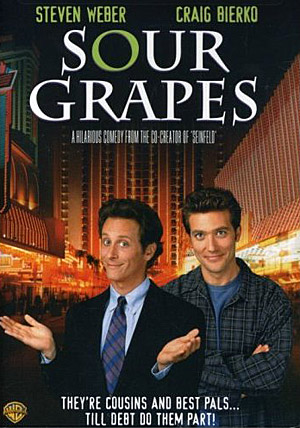
I'm a huge Larry David fan and finally got around to watching his 1998 movie Sour Grapes over the weekend. And it was bad. Like, really bad. So then I also watched Overnight, a documentary that follows the quick rise and fall of Troy Duffy, the writer/director behind The Boondock Saints.
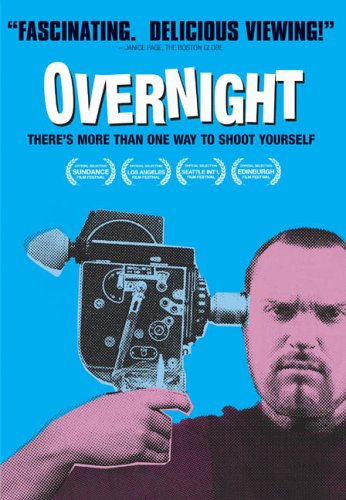
I'd heard about the documentary forever and had been meaning to watch it and was glad to have finally seen it, but I'm not sure I can recommend it. If you're a Boondock Saints fan and really like film (as in you appreciate the behind-the-scenes stuff), then yeah, you might enjoy this. If you didn't care for the movie or didn't even see the movie, then this probably won't interest you. It starts out really good, but then seems to drag on. It made me think of Orson Welles, and how awesome it would have been had Orson had some friends following him around with a camera when he got the amazing deal with RKO and then, eventually, made Citizen Kane. That would have been incredible. But no, instead we have Troy Duffy, who was more arrogant than genius. And if you don't have Netflix (where it's streaming instantly), you can check out the documentary in parts at YouTube, staring with part one. To peak your interest, here is the trailer (don't mind the Dutch subtitles):

httpv://www.youtube.com/watch?v=p-dlNX4AxqM