Insights

"My Books May Not Be Great Literature, But They Certainly Don't Suck"

Just because you can, doesn't necessarily mean you should. This is an important reminder for pretty much anything, but it definitely applies to self-publishing.

Sure, self-publishing your novel is very easy nowadays, but should you? If you have a novel and you've queried one hundred agents and didn't hear back from a single one, then you need to ask yourself what it is about the novel that isn't getting attention. Because if it doesn't grab the attention of at least one out of one hundred agents, then chances are it probably won't grab many readers.

But wait! someone in the back of the audience shouts. Agents don't know anything anymore!

Do you really believe that? Sure, they're not all amazing. Some are so-so. Some even suck. But their job is to find books that they think they can sell to publishers.

But wait! someone else in the back shouts. You don't need publishers anymore!

This is true. You don't need both kidneys, either, but it's ideal to have both. I'm not saying publishers are needed anymore, but it seems the current trend is to completely buck the system and just self-publish. And, honestly, self-publishing makes more and more sense. Sure, there's still that stigma, but the stigma seems to be mostly with other writers. Writers are, for the most part, egotistical beings. We want to be accepted by readers, yes, but also by our peers. It is, in many ways, a literary circle jerk.

Me, I don't really care to participate. This shouldn't be surprising to regular readers of this blog. I'm not seeking acceptance from my peers and other writers so much as a solid continuous readership from ... well, readers.

Awhile ago, I was talking to a writer friend of mine about self-publishing a certain manuscript, and this friend said, "Why would you want to do that? You're a good enough writer you don't need to self-publish."

And that's the thing, isn't it? Self-publishing is no longer a writer's very last option. In fact, if the writer is smart enough, they might consider it first and foremost. Sure, you might miss out on that instant gratification of a book deal, or you might lose some of the respect of your peers, or you might not be nominated for awards, but so what?

Then again, just because you can, doesn't necessarily mean you should.

Just because you have a novel on your hard drive that you were never able to sell, doesn't mean you should throw it up on Kindle and cross your fingers. You are, after all, a brand, and your novel is a product. If readers find your product and aren't impressed, they'll remember the brand, and they'll probably never try one of your products again. This is why you need to make sure that if you do self-publish, you're doing it with your very best.

Don't get me wrong -- editors are nice, but no editor is the same. The suggestions editor A would give you on your novel might be completely different from what editor B would give you. And editor C? Editor C will give it a read-through, might cross a few things out or circle a few words, and then pat you on the back and send you on your way.

For the novels I've self-published so far -- The Calling, The Dishonored Dead, and just recently The Serial Killer's Wife -- I know that they're good. I know that they're clean. They've been vetted by agents. Major publishing editors have seen the manuscripts (except SKW; I decided to simply bypass the publishers on that one). Many, in fact, liked the books. Ultimately, though, it always came down to a question of "just not being right" at that moment in time.

As I've said before, publishing is a mixture of talent and luck. The one you have control over, the other you don't.

And as I've said before, no two writers are the same. What works for one writer probably won't work for another. So if one writer sells one million e-books ...

As you've probably already heard, yesterday John Locke sold his one millionth Kindle e-book. It's quite an impressive feat, especially since he's only published nine books and just started publishing them two years ago. He is, in a way, the James Patterson of self-publishing.

And he just sold over one million Kindle e-books.

Good for him.

Seriously, I mean it. I don't begrudge anyone his or her success, no matter how big or small. I do, however, take issue when someone uses their massive success to sucker other people out of their time and money.

Because on the heels of John Locke selling one million Kindle e-books comes this new e-book of his:

Yes, that's right: How I Sold 1 Million eBooks In 5 Months! ... which is an interesting title, considering the man has been selling his e-books since 2009, but whatever the case. Anyway, when I saw this new e-book I thought, Okay, makes sense, I guess, try to cash in while you can. But then I saw the digital list price and it made me go, What the what?

$4.99.

If you're at all familiar with John Locke, he has branded himself as the 99 cent novelist. Which means he only makes 35 cents on every e-book sold, but still, sell a million e-books and that's no chump change. But yet, a 99 cent novelist, you'd think that his ... well, get-rich-quick e-book would be priced accordingly. Nope. Even $2.99 would be somewhat reasonable, though from what I understand the actual book isn't very long at all. In fact, I was just curious enough to download the sample and see what all the fuss is about (no surprise that the e-book has already made it into the top 100 of the paid Kindle store). Here are some actual passages from the e-book:

The phrase "vanity publishing" was almost certainly invented by traditional publishers years ago in order to squash the competition from entrepreneurial authors.

It worked.

By ridiculing and publicly shaming self-published authors for daring to invest in their own talents and abilities, publishing houses were able to elevate themselves to god-like status. What they're saying, when an author believes in his abilities to the extent he's willing to invest his own money to publish a novel, he's writing purely for his vanity!

I have to give credit to the geniuses that came up with this hogwash, because publishing is the only business in the world that has managed to make such a ridiculous notion seem plausible.

Note that there's only one exclamation point in that section. Just note it, because there's many more ...

When you look at what's available [in the Kindle store], you'll find lots of choices, including free books and famous authors, whose titles generally run $9.95 to $14.95. You'll also find John Locke novels for 99 cents. The famous authors' current books are your first choice, of course, so you'll want to get several of those.

But how many can you afford?

After you've downloaded several, and realize you've spent $40 or more, you're still hungry for content, and this is where I come in! You look at a $9.95 book with 138 reviews, 60% positive, and you look at John Locke's 99 cent book with 138 reviews and 80% positive. You see John Locke has nine books available and you calculate you could buy all nine for less than one of the famous author's books!

You think, "I could buy five John Locke novels and a moche latte for less than one famous author's book!" You read the "about the author" section and learn that every book John Locke has written became a best seller, and he is also, in fact, a New York Times best-selling author.

You figure, "What the heck. I'll give John a try. I've never heard of him, and he probably sucks, but hey, it's only 99 cents." -- And that's the moment I turn the tables on the famous authors, because first, my books may not be great literature, but they certainly don't suck. Second, there's no way in the world the famous authors can afford to price their books for 99 cents, because their publishers would lose a fortune!

As I've been telling people for more than a year, when famous authors are forced to sell their books for $9.95, and I can sell mine for 99 cents, I no longer have to prove my books are as good as theirs. Now the famous authors have to prove their books are ten times better than mine! -- And in a game like that, I like my chances!

The sample sort of fizzles out after that, but you get the idea. In fact, I actually don't even feel like I need to comment further. I'll just end with what I started with:

Just because you can, doesn't necessarily mean you should.

And if you do, make sure it's your very best.

Okay, now that our seminar is over, you can PayPal me $4.99 at your quickest convenience ...

Validation Organization

Earlier today Joe Konrath blogged his thoughts about the Mystery Writers of America's change in their submission guidelines, allowing active membership to e-book and print on demand authors ... authors who are published by an actual publisher and provides that content as an e-book or POD book, not authors who self-publish themselves. Of course, a lot of authors are up in arms, while others are simply shrugging it off.

The post itself is interesting -- at least to me, as I've never been a member of any writers organization -- because it gives some insight into the MWA and how, ultimately, they seem to be an organization that is supposed to exist to support writers but instead exists simply to sustain itself.

The MWA isn't the only organization like this, of course, but that's beside the point.

What's the reason to join a writers organization? It is simply for the validation and the warm, fuzzy feeling of being accepted? I know, years and years ago, writers busted their butts to sell so many stories at 3 cents a word to become an "active" member in the Horror Writers Association. 3 cents a word, at that time, was considered professional rates. Now, I believe, it's up to 7 cents a word. And say you do become an "active" member, then what? It basically allows you to vote for the HWA's award, which members can vote for even if they haven't read any of the novels or stories nominated. Beyond that? I'm not totally sure.

Of course, Nick Mamatas brought up a good point on Twitter, how some organizations like MWA exist to advocate for writers against publishers. So if a publisher is screwing over one of the members, the organization, in theory, will step in and help out.

So if you're a writer with no publisher, then there's no need for advocacy, which then begs the question in this day and age as more and more writers are beginning to self-publish: what's the use for some of these writers organizations besides, maybe, that warm and fuzzy feeling of validation?

*   *   *

I'm plan on seeing Super 8 tomorrow. As you can imagine, I'm super psyched.

Lessons From Lady Gaga

Despite what you may feel about Lada Gaga, when it comes to marketing, she knows what's she doing. Look at how she recently went directly to Amazon to sell the MP3 of her new album for just 99 cents. I'm not that big of a fan but I'll admit, I bought it. And why not? When you can buy a brand new album for 99 cents, that is what I like to call a no-brainer. When asked whether her new record was worth more than 99 cents, Gaga said:

No. I absolutely do not, especially for MP3s and digital music. It’s invisible. It’s in space. If anything, I applaud a company like Amazon for equating the value of digital versus the physical copy, and giving the opportunity to everyone to buy music.

Of course, as it turns out, Amazon paid the difference on all of those purchases to the record company, as this was also a way to help promote Amazon's new Cloud Drive and Player, so you can't quite equate it to the same as authors publishing their novels for the same price, but in a way, it does show a level of outward thinking on Gaga's part.

So what can we learn from Gaga here? Well, that 99 cent can be beneficial at times. There will always be the debate on whether 99 cent e-books are good for the author and blah blah blah, but do you know who they can be very good for? The reader.

Last week Aaron Polson did a little rant about this literary agent's blog post. It basically talks about self-publishing and comes to this startling conclusion: "This trend toward self-publishing serves primarily the writer. (Not readers and not the publishing industry as a whole.)"

I thought about doing a blog post about this but never could think of anything good enough, as I began to focus more on why do writers read these blogs by literary agents in the first place? Sure, you can get some insight into the publishing industry, but do you really want to be represented by an agent who spends a lot of their time blogging when they should be reading manuscripts and trying to sell those manuscripts? In my opinion, most of these agents blog just for the ego boost it gives them and nothing more. I mean, look at that one agent's blog post and the 100+ comments. Almost all of the commenters are writers, and guess who they agree with -- the agent, of course! Like by agreeing with the agent might bring them closer to one day being signed by the agent.

Anyway, my thoughts on "this trend toward self-publishing"? Yes, it serves the writer, but it also serves the reader by delivering reasonably priced e-books. I'm sure I mentioned here before how one of the main reasons I finally decided to jump into self-publishing e-books with both feet was because of Scott Snyder's Voodoo Heart. The Kindle edition had been $9.99, and I had waffled a bit on whether or not to buy it. Then, a month or two later, Random House went with the agency pricing model, and guess how much the collection became? $14.99. That's actually a bit more than the trade paperback at Amazon, believe it or not.

So now I ask you: how does that price benefit either the writer or the reader?

It doesn't benefit either of them. Who it benefits, of course, is the publishing company, and, perhaps, Scott Snyder's literary agent.

Obviously that blogging literary agent doesn't really care much at all about readers, but just her own job. Because if more and more writers start going directly to readers, then where does that leave her?

But 99 cent e-books? Sure, they can be beneficial. I mentioned last week how Amazon had stopped the free promotion The Silver Ring but the e-book was still selling. I figured when June started, sales would begin to trickle. But they haven't so far. Yesterday alone I sold over 100 e-books. As of right now today, I'm currently at 164 e-books. That's just in a day and a half. To give you some prospective, the number of e-books I sold on Kindle in April -- the month I released The Calling and did that mini blog tour -- was only 165.

So within less than two months I already have massive increase. Granted, Amazon's free promotion on The Silver Ring helped matters drastically. In fact, so far this month the bulk of the sales are for The Silver Ring. I was lucky, but I also used that luck to my advantage. I didn't just sit back and see what would happen. No, instead I used the free promotion to promote my other work and did everything I could go spread the word to get the e-book to the top 100. And that happened. And, right now, it's paying off.

Will sales for The Silver Ring eventually slow back down? You bet. Dave Silva says I'm way too pessimistic all the time, but I like to think of myself as just being realistic. Because let's face it -- the e-book isn't going to keep selling as well as it is all month long. It will eventually drop off. But that's okay. Because I'm sure another one of my e-books will just take its place. After all, the prices are right for the reader. And the reader is the most important thing here, no?

Pre-Rapture Notes

Last week I mentioned how The Silver Ring had been downloaded almost 10,000 times. Well, seven days later, it's now been downloaded over 22,000 times. Again, what does it mean? Who knows. The numbers are slipping in the US Store (currently #106, plus a new review calling it "Better than mediocre..."!) while in the UK Store the novella still hangs steady at #11. But I have heard from a handful of readers who said that they did download the novella, liked it, and then checked out The Calling. Two even said they were really looking forward to The Serial Killer's Wife. So at least there's that. You have to start somewhere, right? Hopefully this is it.

*   *   *

So this guy -- the president of the aptly named Family Radio -- says the Rapture will occur tomorrow, despite the fact he also claimed the same thing would happen on September 6, 1994. Here's what he said recently in regards to that little boo-boo:

"At that time there was a lot of the Bible I had not really researched very carefully. But now, we've had the chance to do just an enormous amount of additional study and God has given us outstanding proofs that it really is going to happen."

Except, of course, if they had really done their research well, they would have noticed a little verse in the Book of Matthew, chapter 24, which says:

"No one knows about that day or hour, not even the angels in heaven, nor the Son, but only the Father."

Anywho, the most disturbing part of all of this is that some of these nutjobs want to euthanize their pets before tomorrow. Sad but true.

*   *   *

Of course, if the Rapture doesn't happen tomorrow, then maybe the zombie apocalypse will. And because of this, I've lowered the price of The Dishonored Dead to 99 cents for a limited time on Amazon (US and UK) and Barnes & Noble. Get it before the zombies get you!

*   *   *

Finally, with no thanks to Netflix, I've been watching through all the back episodes of Scrubs. I didn't realize I had already seen as many seasons as I apparently had. But I finally got to season six, a new season for me, which aired back in 2007. And think how pleasantly surprised I was when, during episode 124 entitled "His Story IV," which talks about the Iraq war, the janitor made a startling prediction.

httpv://www.youtube.com/watch?v=qqXKLb1Y46s

That was four years ago, folks. Maybe these nutjobs should look to Sacred Heart's janitor for new outlook after tomorrow's faux pas.

The E-Book Cover Game

Every so often someone asks me about my e-book covers and who I got to design them and how much it cost. And the answer always depends on the e-book cover, as some were done by myself, others were done by my friend Wyatt Perko, and my most recent one was done by Jeroen ten Berge (who will also be doing my upcoming thriller The Serial Killer's Wife). The thing is, e-book covers are even more important than regular book covers. Sure, a regular book cover has to really grab your attention, but most likely the potential reader is in the bookstore and is already browsing for new books. The potential reader and book are so very close that the potential reader can actually pick the book up, turn it over, read the back, even flip through the pages.

But a potential reader can't quite do that with an e-book, can they?

No, all they can really judge, oftentimes, is just a thumbnail, so you better make sure that thumbnail sticks out and really catches attention -- and in a good way.

Of course, to do this will cost either a) money or b) time and effort. The thing is, a lot of writers don't have the extra cash to spend up front for professionally designed covers (a sort of catch-22, if you think about it). So they decide to do it themselves, sifting through deivantart.com or istockphoto.com. There they might find something of interest and, if all goes well, will get permission from the artist to use the artwork or simply pay the correct amount of credits. And then it's off to Photoshop, where they add their title and byline and then -- ka-blamo -- that's it. Or maybe they are talented enough to design their own covers. This is definitely possible. In fact, Aaron Polson has been designing some really great covers of his own recently.

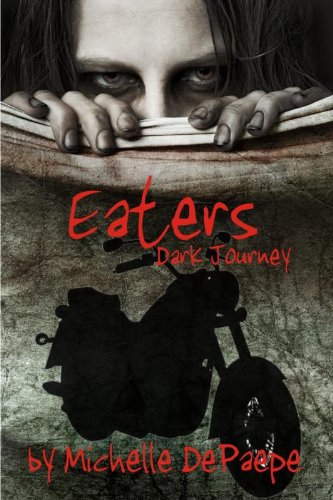
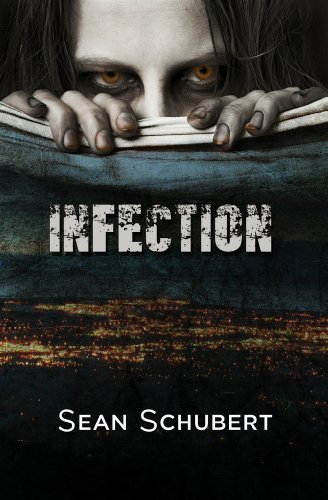
But let's go back to those who decide to use some kind of stock image. It might be a great image, but remember that when you decide to use it, it doesn't mean nobody else can use the same image too. That's what those images are there for. So then you might end up in a situation like these three writers.

The funny thing is, while the first two titles are self-published (at least I believe they are), the last book there, Infection, is published by a company called Eloquent Books, which, if you Google them, brings you to this website. It's a publisher but it's not really a publisher, as evidenced by this submission page. Right now I'm too tired and lazy to do more research, but I'm guessing this is the kind of "publisher" you want to stay away from. After all, they are VERY INTERESTED in the following (their caps, not mine):

Quite honestly, if you're an author who already meets those qualifications, then trust me, you don't need this "publisher" in the first place. Especially since this "publisher" will only use stock images like this one:

Remember, if you don't want to self-publish your own e-books and would rather have a publisher do it so you can think yourself special for having a "publisher" easily distribute something you can do yourself and then keep taking a cut of your proceeds, please make sure they are at least creating for you original and eye-catching cover art. I mean, it's the least they can do.