The Art Of Rejecting Rejection

Rejection is the most common thing a writer can experience. When it comes to writing, rejection is the rule, not the exception. If you cannot handle rejection, don’t be a writer.

The above basically sums up a massive post Roxane Gay did earlier today at PANK’s blog about writers rejecting rejection. This whole rejecting rejection phenomenon is so fascinating to me. It shouldn't be, of course. I used to edit a magazine years and years ago and we occasionally got the impulsively rude and snide rejection of a rejection. Even when I sent out responses to the Hint Fiction anthology I got a few of these. Writers, it seems, have the most fragile egos, which is odd because, as Roxane says in her post, when it comes to writing, rejection is the rule, not the exception. Everyone gets rejected at one point or another. I cannot seriously believe that there is one lucky writer out there who has never been rejected, not unless they wrote one decent story and sent it to a somewhat respectable journal run by a sibling who took pity on them and accepted the story and that writer never submitted anything else. In fact, I'm pretty sure I even once talked about how rejection is important for writers, how it actually helps them become better writers. All too often I see some writers publishing stories in the same journals and magazines; they have established a relationship with the editors there and, who knows, maybe have found that their stories will almost always be accepted and so they continue to submit there again and again and again because they don't want to play the whole rejecting game. And while there's nothing wrong with submitting to the same editors all the time, it's important that writers submit to other journals and magazines, ideally those of top tier quality, because otherwise it's possible their career as writers will plateau ... though I don't think these particular writers care much about whether or not this happens and instead are just happy to be keep their rejections to a minimum.

In the past I've gotten many, many rejections, but never have I fired off a snide reply. Well, that's not true. I remember there was one rejection where the editor called me "Mr. Smartwood" and I was in a bad mood at the time and quickly replied with something like "Thanks for reading the story, but it's Swartwood, not Smartwood." If I could go back and stay my hand from pressing the SEND button, I would. Then there was one rejection that was just snide and uncalled for. I didn't reply to the editor in question but forwarded it on to the publisher, explaining that while I didn't care much about the rejection itself, I didn't think it was professional for the editor to be so rude. The publisher agreed, apologized, and that was that. I never submitted to that particular market again, so I have no idea if the editor in question changed his ways. Honestly, I don't much care.

If you want to know the truth, the Internet has made it all too easy for writers to be this way. They sit down, open their email, read a rejection, and immediately send a reply. I can't imagine many actually think it over for an hour or two, try to get the wording just right, maybe even have a few close friends look the rejection's rejection over before they send it. No, it's all done in the heat of the moment, the writer's fragile ego making it so they can't think clearly. This is why a friend of mine once told me, years and years ago, he preferred to read paper submissions, because that way he almost never heard back from writers as opposed to email. And he's right -- it takes too much effort to actually write out a letter, put it in an envelope, seal that envelope, address that envelope, place a stamp on that envelope, and put it in the mail. At some point, that writer's anger would have dissipated and allowed them to think clearly.

And then, of course, you have the writers who so completely not with it that they will then partake in a flame war in the comments section of a blog post about your rejection of a rejection:

I’m the angered rejectee, and even though I ALWAYS regret my immature behavior, I see no good definitive argument in Roxane’s blog against it. Why is it wrong to react angrily and correct to bite your tongue? Is that just an opinion? Personally, I think people should express their true emotions more often than is the norm. Being phony is a choice, one that all you people in agreement can make for yourselves, but if the point of the blog is to convince me with logic that my actions were worse than just immature and uncalled for, but somehow morally wrong and reprehensible, then you’ve failed. It might be ugly behavior, but it isn’t the type you should spend your time condemning, and it isn’t the only ugly behavior going on here, is it?

So it’s like a lottery? We have to send the right piece to the right person at the right moment AND you’re deluged with submissions AND you want suggestions as to how to work more efficiently or lessen the lottery-like nature of the process? I’m glad you asked. Make it less subjective. Come up with a statement regarding ‘what you’re looking for’ so we know whether or not to waste everybody’s time with an unwanted submission. Simply telling writers that what they submitted is not what you’re looking for (a practice all you journal editors have taken up), it does nobody any good. Why do you even write that? Is it simply because it’s the norm?

It goes on and on. Be sure to check it and the rest of the comments out if you want to kill a half hour.

*   *   *

Today Monkeybicycle’s Steven Seighman gave my story "Crash Test Dummy" a shout out for Short Story Month:

This story feels like it could pertain to a lot of different people: domestic troubles, job frustration, the need to get away. But the author puts a fun new twist on those very relatable things by making them happen to a crash test dummy. When you hear that phrase, you can’t help but think of exactly what it is: a mannequin with little yellow and black marks all over him in a jumpsuit, going through the windshield of a car in slow motion in a testing warehouse. Or is that just me? (I also think of–of course–the band that brought us “Mmm, Mmm, Mmm, Mmm.”) The idea of an animated one of these things living the life of an everyman is intriguing, and Swartwood tells its story perfectly.

Thanks, Steven!

*   *   *

On a final note, this looks really interesting, doesn't it?

httpv://www.youtube.com/watch?v=uhw6OeTVcwM
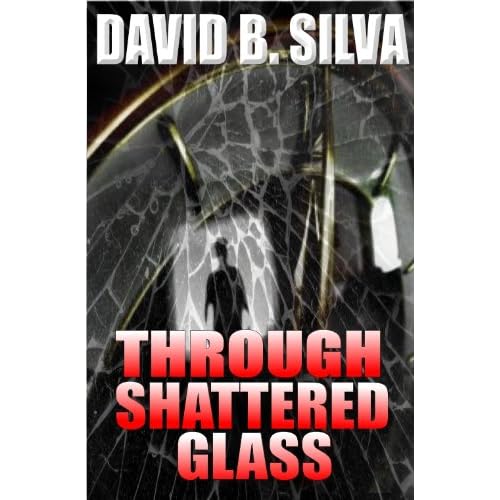
 

Guest Post By David B. Silva

(I've talked before about David B. Silva and just how great his short story collection Through Shattered Glass is. Originally published by Gauntlet Press as a limited edition hardcover, signed by both Dave and Dean Koontz (who provides the introduction), it's very hard to come by. Which is a shame, because, again, it's such a great collection. But finally Dave has released the collection as an e-book, and to celebrate, I asked him to write a little about it here.)

I Love To Write ’em More Than Readers Love To Read ’em

I had a short email conversation with Rob yesterday. He had offered me this blog space to write a post to help promote my short story collection, Through Shattered Glass, which I just released on the Kindle and the Nook. I was (and still am) very grateful for the gesture and told him I'd like to write about short stories versus novels. I offered a couple of reasons why I prefer to write short stories (which you'll find included here) and he responded with, "Yeah, but novels sell better."

And that's the rub, of course.

Rob is right. Novels have always sold better than short stories. That's why only a handful of people have been able to sustain their careers by primarily writing short stories (Ray Bradbury and Harlan Ellison, for example).

Though I have to admit, I'm a little surprised that short stories aren't more popular today than they were fifteen or twenty years ago. Time seems much faster today. There always seems to be more to do than the day allows. And as time speeds up, our attention spans seem to grow ever shorter. We're surrounded by distractions. Cell phones everywhere. Texting. Tweeting. Checking the latest on Facebook.

Who has time to read a novel?

Apparently, most readers.

Yet, the ideas that come to me tend to be better suited for short stories. Their landscapes are generally smaller, and there's an intimacy I feel toward the characters that I often struggle to maintain with the characters in my novels.

Yes, you have less space to work with in short stories, less room for error. Though, if you screw one up, you've only lost a week. Screw up a novel and you've lost three to six months. Plus the sense of completion comes much sooner with a short story than a novel.

Yet, short stories are harder to sell and the markets for them are gradually disappearing.

In his introduction to Everything's Eventual, Stephen King wrote: "The short story is also not a lost art, but I would argue it is a good deal closer than poetry to the lip of the drop into extinction's pit."

I hope that's not the case, though I suspect King has it pretty much right. In the meantime, before its extinction, I'll be writing as many short stories as I can.

If you'd like to read a few of them, I invite you to pick up my first collection, Through Shattered Glass.

It's available in ebook form now, here:

Paperboy: A Dysfunctional Novel By Bob Thurber

Bob Thurber -- whose story "Shipwrecked" was a reader favorite in the Hint Fiction anthology -- has a new novel out and I asked him a few questions about it.

RS: So what is Paperboy: A Dysfunctional Novel about (and how does the "dysfunctional" play in)?

BT: Paperboy is an odd little book, dysfunctional in content, themes, and form. The 262 pages contain 157 short chapters, each one narrated by Jack Fisher, a 14 year old paperboy. His gritty coming-of-age story takes place during the summer of 1969, the year of the first moon landing.

Many of the chapters could stand alone as vignettes or short self-contained fictions, which makes them easy for the reader to digest. And makes for an easy read, which is a good thing considering some of the things that Jack reveals about himself and his family. As one reviewer said, “These vignettes build upon, echo, reflect, and shatter each other.” Overall, they create the illusion of a complete novel while resisting to be “a novel in fragments.” The good news is, I’m told, it’s a page turner.

RS: This is your debut novel, but is it your true first novel? If not, how many other novels have you written before this?

BT: Yes. It’s my true first novel. Paperboy was drafted in 2002, though it’s been reworked quite a bit since then.

RS: Your story in the Hint Fiction anthology -- "Shipwrecked" -- was a favorite of many readers. Have you written any hint fiction stories since then?

BT: Sure. Dozens of them. So I’m well prepared for your next Hint Fiction anthology. And thank you again for making me a part of that neat little book.

RS: What else are you working on?

BT: Right now I’m finishing up another novel titled “April Fish,” which my agent is eagerly waiting for. And then I’ll get to work on another project that I've been outlining for about three decades.

To learn more about Paperboy: A Dysfunctional Novel, click here.

And The Waiting Begins

The deadline for this year's Hint Fiction contest has come and gone. I wasn't at my computer at midnight to close comments and take away the alternative submission form (though two writers did try to sneak through an hour or two after the deadline but which have since been deleted). Instead my wife and I went went down to Philadelphia tonight to visit Sarah Rose Etter and Ben Loory (Ben was visiting from the west coast). Fun was had by all. In fact, it's almost five a.m. right now and I'm in need of some serious sleep but just wanted to let you know that it will be a few weeks before the winners are announced. First I have to go through the 500-plus stories that were submitted (this is a rough estimate, of course, but I'm pretty confident this is near the mark) and narrow those down to about 50, and from there narrow those 50 stories down even more until I come up with a top 10-15 stories, and those will be forwarded on to our guest judge. So I'm thinking at least two weeks, if not three, though it could be less. In the meantime, May is apparently Short Story Month, so go and read some short stories, why dontcha?