What Makes A Bestselling Author Today?

The New York Times. USA Today. The Wall Street Journal. The list can go on and on, but those are the three major ones I can think of in the US.

To have your name added to one of those lists, your book has to sell reasonably well (USA Today, I believe, bases their list on actual sales numbers, while the New York Times has ... other methods).

Anyway, it's every writer's dream to become one of those coveted authors who can put on their tombstones New York Times bestselling author.

And while the major bestseller lists are still around today and will be around for a while, there's a new form of bestseller-dom on the horizon -- well, it's actually already here.

I'm talking about the Kindle Bestselling Author, of course.

Now just what exactly does that mean?

Don't get me wrong, being a Kindle bestseller can be great. In fact, there are some self-published writers who sold so well on Kindle that they actually made the New York Times bestseller list. That's quite a feat. As I've said before, the digital marketplace has created a level playing field. Before, no newbie author could ever dream of outselling Stephen King, as the first print run for a King novel is quite huge, while a new author would be lucky if their first novel gets a print run of, say, 7,500 copies. But, again, with digital, the distribution is endless.

Now, to get back to the point, what constitutes a Kindle bestseller?

I would say getting into the Kindle Top 100 (the overall 100, not the genre 100 or sub-genre 100, which we'll talk about later) would constitute, as it means those books are the top selling titles in the Kindle Store out of every other title.

Of course, the list is updated hourly, so it's possible for a book to squeeze into the Top 100 for an hour and then fall back out.

Would that count as a Kindle Top 100 Bestseller?

I guess. I mean, you have books which make the New York Times Bestseller List for only one week before disappearing, and they certainly count.

So let's agree being in the Kindle Top 100 (the overall, remember) is pretty impressive.

But what about the genre top 100 lists? There's mystery and thrillers, science fiction, horror, etc. My novels The Calling and The Serial Killer's Wife have both been in the Kindle Top Horror 100 and stayed there for quite some time. In fact, in the UK, both of those novels are still in the Horror Top 100, which ... makes me an international bestselling author? That's another gray area which is probably a whole new blog post in itself.

Now what about the sub genre lists? Like in horror, there's Dark Fantasy and Ghosts and Occult. So it's possible to have your book listed under one of those sub genre bestseller lists.

Let's look at the Occult sub genre, shall we?

Currently The Calling is #76 on that list.

Sounds good, right? Well, certainly, yeah, but the sales ranking of the book itself is #9,394, which means currently 9,393 other books are selling better.

Again, I'm not complaining, but when over 9,000 other titles are outselling mine, does that make it a bestseller?

Oh, and let us not leave out the Kindle Select Program. Back in the beginning of the year, authors were gaming the system with that program. Hell, I was gaming the system. Amazon's algorithm allowed it to happen. I made two of my titles free, they stormed the free bestseller lists (and, while I'm thinking about it, any author who thinks the free bestseller list counts as a "bestseller list" is an idiot), and when they went back to paid, they sold like hotcakes. In fact, those titles -- No Shelter and Man of Wax -- both hit the genre bestseller lists for Mystery & Thrillers and Horror, respectively.

So are they bestsellers?

In the end I guess it's all about how the author wants to market himself. I've sold quite a decent amount of ebooks this past year, and again, many of my titles have held strong in the genre bestseller lists, so I could easily add "bestselling author" to my bio. But I won't. If I ever hit the Kindle Top 100 (again, the overall list), then maybe I will, but for now I just can't bring myself to call myself that. For one, the "Kindle bestselling author" has become almost ubiquitous. Sure, many authors haven't hit those genre or sub genre lists and probably never will, but many have, though not nearly as many have hit the overall Top 100. And the overall Top 100 is where it's clear your book is actually selling well. Not when it cracks a genre or sub genre list for a day. Calling yourself a Kindle bestselling author then is just disingenuous ... though considering the recent debate about sock puppet reviews, what's disingenuous anymore?

Oh, and don't get me started on the authors who confuse a sub genre for an overall genre, so if their book is #5 in the Occult section under Horror, they proudly tweet and Facebook that their book is #5 in horror. Um, no, sorry to break it to you, kiddos, but it's not, so get a clue.

Because, again, being on a sub genre bestseller list doesn't necessarily mean much. I hate to single anybody's book out, but currently there's this title, which is #100 in the sub genre of Series under Science Fiction.

That title's overall ranking?

#112,192

Long live the Kindle bestselling author!
The Inner Circle Has Arrived

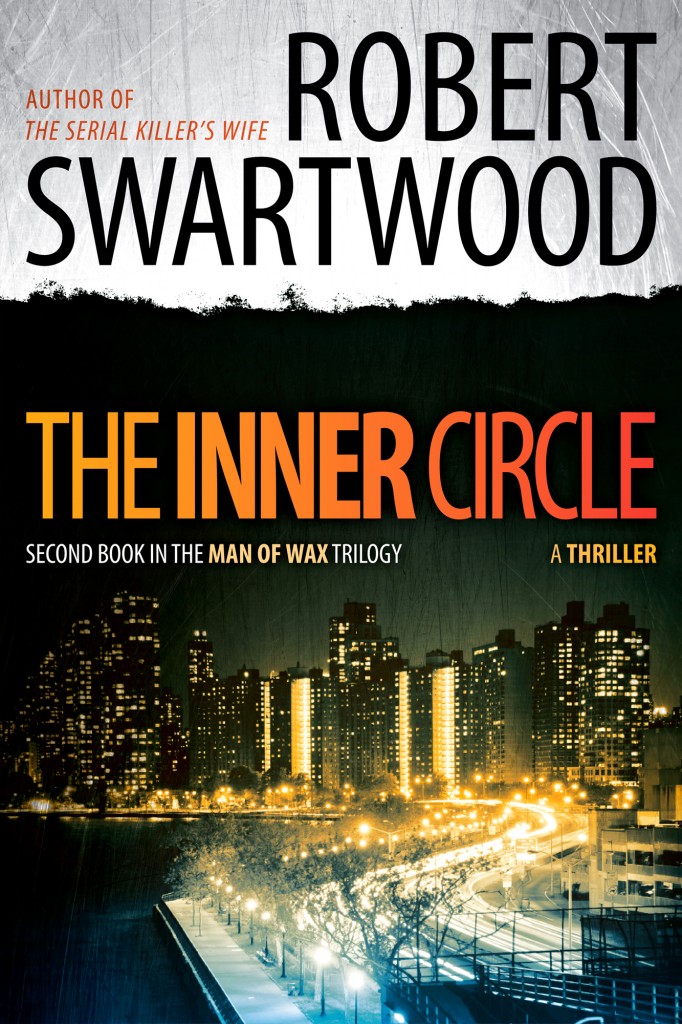
The Inner Circle is finally live. Well, at least it is on Kindle and Nook. Kobo and iTunes seems to be taking awhile. I know many of you have been looking forward to this since April, when I (foolishly) predicted it would be released. Obviously I miscalculated, so apologies for that. But now the book is finalized and available for your reading pleasure. So far this is the longest book I've published (over 120,000 words) and I think it's probably my best. I'm quite proud of this book, and I hope you all enjoy it. Here's what it's about:

Two years ago Ben Anderson woke up in a rundown motel, three thousand miles from home, his family missing, and the words LET THE GAME BEGIN written in blood on the back of the bathroom door.

Now, with his past life gone, Ben has become a soldier in Carver Ellison's army against Caesar.

But when a mission goes wrong and one of their team members is murdered, it's the last cryptic word spoken that will lead Ben and the team one step closer to the Inner Circle -- a step that may bring them salvation ... or get them all killed.

Here are the purchasing links:

Also, for those of you on Goodreads, you can mark the book to-read here.

To celebrate this new release, Man of Wax is currently 99 cents on Kindle and Nook for the next two weeks. Tell everyone!

Finally, mark your calendars -- September 17th I'll be doing two live readings here at the website via Ustream. The first reading starts at 7:00 pm EST, the second at 7:00 pm PST. I'll read from The Inner Circle and also do a Q&A.

P.S. For those of you who prefer dead-tree books, a trade paperback is forthcoming (450 pages long!), and I will of course notify you when it's available.

Podcast: Talking Shop With Brian Keene

A few days ago I stopped over at Brian Keene's place to help him upload his very first self-published title Alone, which was released last year as a limited edition hardcover and is available now as an exclusive ebook (BUY IT!). When we were done, we cracked open some beers and recorded the following podcast, in which we discuss publishing (both traditional and self), the state of limited edition books, what makes a professional writer, Twitter, and a whole lot more. Enjoy, and if you haven't done so already, check out Alone.

Talking Shop With Brian Keene

On Buying Reviews

Joseph D'Agnese just passed on this recent New York Times article about a (now-defunct) service called GettingBookReviews.com which is exactly what it sounds like.

In the fall of 2010, Mr. Rutherford started a Web site, GettingBookReviews.com. At first, he advertised that he would review a book for $99. But some clients wanted a chorus proclaiming their excellence. So, for $499, Mr. Rutherford would do 20 online reviews. A few people needed a whole orchestra. For $999, he would do 50.

There were immediate complaints in online forums that the service was violating the sacred arm’s-length relationship between reviewer and author. But there were also orders, a lot of them. Before he knew it, he was taking in $28,000 a month.

It's a long article, but definitely worth checking out. One major self-published author is mentioned for using the service, an author who I wasn't at all surprised to see named (hint: it's John Locke).

“My first marketing goal was to get five five-star reviews,” he [Locke] writes. “That’s it. But you know what? It took me almost two months!” In the first nine months of his publishing career, he sold only a few thousand e-books. Then, in December 2010, he suddenly caught on and sold 15,000 e-books.

One thing that made a difference is not mentioned in “How I Sold One Million E-Books.” That October, Mr. Locke commissioned Mr. Rutherford to order reviews for him, becoming one of the fledging service’s best customers. “I will start with 50 for $1,000, and if it works and if you feel you have enough readers available, I would be glad to order many more,” he wrote in an Oct. 13 e-mail to Mr. Rutherford. “I’m ready to roll.”

What's interesting about the timing of this article was just last night I was on Amazon and came across the self-published book Alice in Deadland by Mainak Dhar, which sold over 60,000 copies earlier this year. It also racked up almost 300 reader reviews. I forget where I heard it from, but apparently a good portion of those reviews are suspected as being fake. Maybe they are, maybe they aren't, but the book's sequel that came out in March? Only 16 reviews. Quite a large difference there, wouldn't you say?

Customer reviews are definitely helpful, not just for writers but for everything. At the same time, you always have to be suspicious of online reviews. This is why I believe the very best form of promotion is word of mouth. A reader is more likely to check out a book one of their friends recommends to them than a book with over 100 five-star reviews on Amazon. That's just the way it is. Reviews sell, but they also make consumers hesitant. Hell, every time I see a self-published book with over 100 reader reviews, I'm hesitant. Are there a lot of readers out there? Yes. Are the majority of those readers apt to leave reviews? No. I've sold over 12,000 copies of The Calling on Kindle, both in the US and the UK. And how many reader reviews does the book currently have? In the US, 20. In the UK, 5.

Mr. Rutherford’s insight was that reviews had lost their traditional function. They were no longer there to evaluate the book or even to describe it but simply to vouch for its credibility, the way doctors put their diplomas on examination room walls. A reader hears about a book because an author is promoting it, and then checks it out on Amazon. The reader sees favorable reviews and is reassured that he is not wasting his time.

“I was creating reviews that pointed out the positive things, not the negative things,” Mr. Rutherford said. “These were marketing reviews, not editorial reviews.”

In essence, they were blurbs, the little puffs on the backs of books in the old days, when all books were physical objects and sold in stores. No one took blurbs very seriously, but books looked naked without them.

One of Mr. Rutherford’s clients, who confidently commissioned hundreds of reviews and didn’t even require them to be favorable, subsequently became a best seller. This is proof, Mr. Rutherford said, that his notion was correct. Attention, despite being contrived, draws more attention.

The system is enough to make you a little skeptical, which is where Mr. Rutherford finds himself. He is now suspicious of all online reviews — of books or anything else. “When there are 20 positive and one negative, I’m going to go with the negative,” he said. “I’m jaded.”

Yes, Mr. Rutherford, I think we're all jaded by this point. I know I am.

Tit For Tat And Other Shenanigans

So earlier today I finished A Face in the Crowd, the new ebook collaboration between Stephen King and Stewart O'Nan, and scrolled through the rest of the ebook (the second half are excerpts from The Talisman and Black House) until I came to the very end and found the "Before you go" page, which encourages readers to leave a review or share their thoughts on Twitter, and also recommends books which other readers purchased after reading this particular title. Here's what I saw:

Now, the first title there, Tit for Tat by Steven King, is currently ranked 1,446 in the US Kindle store, which means it's selling pretty well. Plus, despite the fact Amazon estimates the page count to be 73 pages, it's priced at $3.99, so you have to figure it's bringing its author over $2.50 for every unit sold.

Why do I say its author?

Well, because this King is not the King, which is reiterated by the seven (current) one-star reviews for the book. Each review exclaims how awful the book is, and how (and this is the important part) THIS IS NOT THE REAL STEPHEN KING!!!

And yet ... people keep buying the book.

They even seem to be purchasing Steven King's other Kindle title, Davey's Brain Drain (seriously, I'm not making that title up), which is currently ranked at 9,190 in the US Kindle store and has two one-star reviews. Oh, and it, too, is priced at $3.99, despite being even shorter than Tit for Tat, coming in at 28 estimated pages despite the subtitle on the cover "A Novel."

Now is it possible that someone named Steven King is also a writer of horror? Sure. But quite honestly, I don't think that's the case here, despite what it says on Steven King's author page:

Steven is 29 living his dream of being a writer in his downtown Toronto loft. Forever being confused with the famous Stephen King, he never pretends to be him, but can only aspire to do the name justice, and hopes on day to shake his mentors hand. While Steven looks for his life partner, he continues to write in his favorite style, horror/thriller. He considers Tit For Tat his crowning achievement, taking 1 year to write it and hopes one day it will become a major motion picture. He is fortunate to write for three different publishing companies, his novels reaching over 100. Graduating from the University of Toronto, he continues to take night classes to keep fresh, and reads anything he can get his hands on. His hope is to spend the rest of the life writing, next to a woman who will spend the rest of her life reading.

I could be wrong, of course, but I think this is one of those instances where some douche is trying to take advantage of a household name (while, at the same time, aspiring to "do the name justice"). And, I don't want to be a complete dick, as I understand every writer is different and works at different paces, but Tit for Tat took a year to write and is only 73 pages? That's, like, 30,000 words, if that, which works out to be 82 words a day. Also, check out how the book is categorized (!!!):

I actually became aware of Steven King weeks ago, and sort of shrugged him off. But when I came to that "Before you go" page on the Kindle, it really made me think.

Do readers seriously just buy whatever Amazon (or any place else) recommends them to buy? I'm not complaining, of course, as I'm sure most of my sales on Amazon come from the fact Amazon is recommending my stuff, but don't readers at least check out the product description and customer reviews before purchasing? Or, even better, download a sample? It's clear many people are staying away from this Steven King, but it's also clear based on those sales rankings many people aren't.

Now, I can see many readers accidentally downloading it because they honestly believe it's really Stephen King. I've seen many people refer to Stephen King as Steven King. Hell, I've even seen a blurb given by very well-known author, in which that well-known author stated that the writer in question reminded him of a young Steven King. And this, my friends, was on a website run by a major publisher. Unfortunately, they eventually noticed the mistake and had it fixed, but still, the confusion does happen.

Anyway, getting back to our friend Steven King, he even has a follow-up to Davey's Brain Drain, cleverly titled Davey's Brain Drain 2: The Sequel (seriously, people, you can't make this shit up). That one is estimated at 22 pages and is priced at $2.99. There is also another title called Amulet of the Queen: Erotic Horror (erotic horror!!!), estimated at 47 pages and priced at $3.99.

Sooooo, my fellow authors busting your asses to produce quality work and gain a readership in a tough and unforgiving marketplace, what's new with you?