Reader Blurbs

There's a trend I've been noticing lately where authors use reader blurbs in their product descriptions for their books. Almost all of these are independently-published -- at least from what I've seen -- but just today when I clicked on the link for the Kindle Daily Deal I noticed that Amazon was doing the same thing. One of today's deals is The Quarry by Iain Banks, and instead of a blurb from an established author or a line from Publisher's Weekly, you find this:

Customer Review: "I quickly found myself lost in the story, laughing out loud while reading it and sympathizing intently with its protagonist Kit, his father and his father's friends."

That's not the only example. A few other books were listed as a Kindle Daily Deal, one of those being Rock Her by Rachel Cross, and the same kind of blurb:

Customer review: "This rocking book grabs you from the beginning, and doesn't let you go until its supremely satisfying end."

I know a lot of people have mixed feelings about Amazon, but one thing is for certain: they know how to sell books. So if Amazon is doing this, it must be somewhat effective, no?

Another reason this came to mind today is I happened to get a new review for my collection Real Illusions on Amazon. In part, the reviewer said:

"Once I know what the threat is I'm not scared anymore. This author knows that, and I loved these stories."

And another reader for the same book:

"Keeps me turning the pages way past my bedtime!"

And another:

"Ranking alongside the likes of Blake Crouch and Scott Nicholson as one of the best self-published thriller writers of the moment, Swartwood delivers a compelling collection of short fiction."

These are all readers who took the time to leave a simple review on Amazon. They're clearly fans of the book, and hopefully of the rest of my work. And I'd have to imagine they would be fine with me using their words to help sell the book.

But at the same time, I still question the legitimacy of doing such a thing, especially when there is always the question of writers paying for fake reviews.

I'll say it now: I've never once paid for a review. Have I offered free books in exchange for honest reviews? Absolutely. Everybody does it, independent authors and even major publishers. Half the time readers request copies and say they'll read and review, but they never do. I seem to have a core group of readers who will leave reviews for all my books, and I appreciate each and every one of them for their support.

But still, that doesn't answer the question of just how effective using reader blurbs to promote a book will be. After all, the reviews are there for readers to peruse before purchasing the book. Most times they'll check out the one-star reviews instead of reading any of the five-star reviews. Because of this, I saw one reader once give a book a one-star review, but then say that the book was actually amazing and that everyone needed to check it out and the only reason he was leaving a one-star review was because he knew everyone would look at it first. Clever, though I wonder just how effective that is, as the ranking does hurt the book overall.

Anyway, I'm curious to hear thoughts. If you come across a new book, are you more apt to believe a blurb from an author you are sort of familiar with or maybe never heard of, or a blurb from what the author or publisher claims is a reader?
Thoughts On BookTrakr

A few weeks ago I got an invitation to proceed with the beta version of BookTrakr, which I had signed up for several months ago. What the site basically does is compiles your sales figures from Amazon, Barnes & Noble, iTunes, Kobo, and Smashwords. Yes, you must provide your log-in information, which many people are hesitant to do. But this isn't a fly-by-night service; they've been working on it for quite some time, and I know many reputable writers who got an even earlier sneak peek, and all of them trust the site well enough.
So anyway, once you provide your log-in information, it takes a while for the site to create a profile for you -- at least it did for me, but that's probably because I have a lot of books that have been published for a while. Then, once everything is compiled, you're able to view each of your books separately and see how many copies you've sold across all platforms or on each individual platform, as well as how much money you've made, how many reviews the books has, its best ranking, etc. It even provides numbers for all the ebooks combined. Because of this, I now see that I've sold, as of this moment, 107,627 ebooks across Amazon, Barnes & Noble, iTunes, and Kobo (I didn't bother adding Smashwords, mostly because I couldn't remember my log-in information at the time). While that number sounds somewhat impressive -- and I guess it is -- you also have to keep in mind that it stretches back to 2009 ... though most of what I sold has been since 2011, so really two years. Even so, 53,000 books a year isn't all that impressive when you consider that some authors sell that number in a single month.

BookTrakr also has a feature where every morning they send you an email of your previous day sales. It tells me how many ebooks I've sold, how much I've earned, a breakdown of the sales across all platforms, whether or not I have any new reviews, if I'm currently on any top 100 lists, and so on. If your sales are good, it's nice to wake up to those numbers. If your sales are so-so, it can be rather depressing. It's possible to turn off the daily emails, though, which might be a good idea, as a writer doesn't have much power in changing the sales. It's like checking the stock market; you can watch your stocks go up and down, but you're pretty much powerless to do anything about it, so sometimes it's best to worry about other things.

Ultimately, I've found the service to be great so far. Currently it's still in beta mode, which means that it's free, though at some point soon they'll start charging. How much the rate will be is still up for speculation, but if it's anywhere near reasonable, I think it's completely worth it. I also say this as someone who, for over a year, would take my monthly sales reports and enter them manually into a spreadsheet. That takes up a lot of time that could be better spent writing.

Is BookTrakr for everyone? Probably not. When Duotrope announced that they were going to start charging for their service, I didn't bother signing up. Why? Well, because I haven't been writing and submitting much short fiction. If I did, then I would probably find the service worthwhile and pay. The same applies here. If an author only has a handful of books that it's easy enough to track, it might not be worth signing up. The same goes for an author who has a few books that aren't selling much at all. The cost of the service might not even off-set how much that author is making. But that's just my two cents. As of right now, I'm impressed, and am curious to see where they take this service next.

Some New Books To Consider

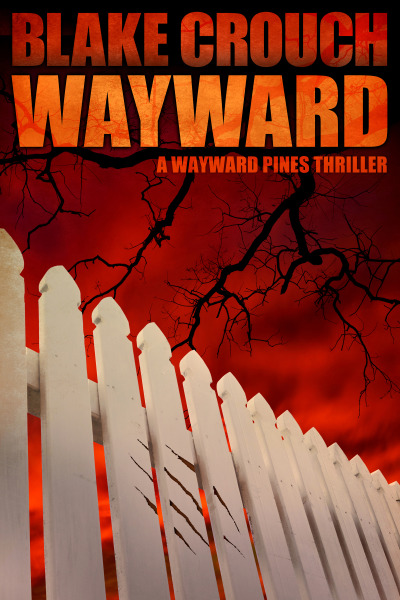
Yesterday was the official launch of Blake Crouch's Wayward, which is the sequel to last year's Pines. I had the pleasure of reading the book a few months ago, and it's excellent. If you're a fan of my work, I encourage you to read Pines and Wayward so that not only can you enjoy two great books, but so that you can also enjoy something special that's coming soon ... (And that's all I'm going to say about that right now.)

RG Dillon has just released his first novel Mineko. I haven't read the book myself yet, but I did design the ebook and paperback. That's not why I'm mentioning it here, though, but rather that Ron's inspiration for writing the book was my very own No Shelter. As a writer, I often get emails and messages from readers telling me how much they've enjoyed my work, but Ron has taken it to a whole new level. I hope you check it out.

Finally, one of my favorite flash fiction writers and all around cool guy Ravi Mangla has a new book coming out this November. It's called Understudies and I'm sure it's going to rock. You can pre-order here.