Midlist, Schmidlist

So there's this essay that was published at Salon.com back in 2004 that has reemerged on the Internets. It first came to my attention on Facebook, but then I saw others retweeting it on Twitter. It's definitely worth looking at if you're serious about becoming a writer (and by that I mean a writer who dreams of one day quitting the day job and writing for a living). It is ... eye-opening. Honestly, I've been hearing the same thing for years now that this particular writer's story seems to be almost every writer's story. It's like American Idol -- everyone dreams of making it big, but only a few actually get there (but because of those few, everyone thinks they can make it). And how does one do so? By talent? By determination? By luck? That, of course, is up for debate, and I'd like to use the comment section of this post for that very thing. So read the essay and tell me your thoughts. But don't expect the essay to cheer you up. This excerpt gives you an idea what you're getting into:

As Promised: The Unexpurgated, Possibly Unfinished History of One Midlist Author's Life

Book 1: Contract signed 1994. Book published 1996. Advance: $150,000.

Book takes one year, no research, pure joy to write.

I love my editor; my editor loves me.

Several publishers vying to buy book means book sells at auction for big advance. Big advance means big publicity budget. Big publicity budget means promotion handled by publicity director, which means reviews in top newspapers, excerpts in top magazines, TV and radio appearances, four weeks on two bestseller lists, seven-city tour. Publisher (Mr. Big) sends handwritten note, thanking me for "writing the great book we all knew you had it in you to write."

Question to agent: "Is there a downside to an unknown author getting such a big advance for a first book?"

Agent's answer: "What are you gonna do, turn it down?"

Pitch line: "Welcome a fresh new voice!"

Sales: I don't ask. No one seems to care. Final tally: Hardcover/paperback sales combined are 10,000 copies.

Current status: Out of print. Small but loyal cult following; 10 years later adoring fans still show up at readings, clutching well-worn copies, eager to tell me how book changed their lives.

Conclusion drawn then: Being an author, working with the best editor and the best publisher on earth is a dream come true.

Conclusion drawn now: There is a downside to getting a big advance for a first book.

Some Clarification

To follow up on yesterday's post, it should be noted that most magazine and journal editors do it more as a hobby than anything else. Very few editors actually get paid for their time, and if they do get paid, it's very little. (Granted, there are some major magazines whose editors work there full-time, but that's rare.) Still, despite all this, that doesn't make it okay to sit on stories for months and months and then, after a year, send a form rejection.

Back when I helped edit Flesh & Blood, we stayed on top of our slush pretty well. Usually responded to subs within a day or two. Those were just electronic submissions though, not print. The print ones piled up into a mountain and weren't even looked at until the next convention when, with about a half dozen of us sitting around a hotel room, we did a marathon reading and breezed through the stories in a couple hours. So response times varied greatly, as those who submitted by e-mail received responses within a few days, while those who submitted by postal mail received responses within a few months, if not longer.

Also keep in mind that many journals have "readers," whose job it is to "read" the slush, but these people are usually not being paid anything, so their every day life comes first, and the submissions get set aside, and while Reader A might stay on top of his or her subs and respond in a timely fashion, Reader B might let that pile of stories build and build ... so in that case, it's all based on luck who ends up with your submission.

Of course, we writers can help our chances greatly in terms of the submission game. I've said it before and I'll say it again: always make sure you study the market you're submitting to. Like, you know, actually read the stuff that market is publishing.

Dan Chaon has some pretty great stuff to say at The Review Review (thanks to Matt Bell for pointing it out on Facebook; in fact, I'm stealing the exact quote Matt posted because it's so damned accurate):

The writing community is full of lame-o people who want to be published in journals even though they don’t read the magazines that they want to be published in. These people deserve the rejections that they will undoubtedly receive, and no one should feel sorry for them when they cry about how they can’t get anyone to accept their stories.

I'll admit (shamefully, yes), in the past I've submitted to markets without actually reading them. These days, though, I try not to do that. In fact, I haven't written much short fiction anyway, so it's a moot point right now, but when I do start writing it again, I'll be sure to carefully study the markets I think would be a good fit for my stories. Because if I don't, I'm just not wasting the editors' time, but my own.

And for online magazines, there's really no excuse -- the stories are there, so why don't writers read them before they submit? After all, don't we as writers only want to be published in magazines and journals that we really like and respect? Because if we do then, um, why aren't we reading them to begin with?

New Twitterage & How Long Is Too Long?

Been quiet around here, I know, but that's because I've been extremely busy, what with this deadline for the anthology fast approaching. I've wanted to post a lot of stuff but just haven't found the time, so here I am at 4:30 in the morning wanting to share with you two things. First, I created a Twitter page strictly for Hint Fiction, because I know those interested in Hint Fiction might not want to follow me and hear my continuous babbling. When there's news to share about the anthology or whatever else, I will share it in both places, but at least with the Hint Fiction account it will be just Hint Fiction and nothing else. If you'd like to follow, please do so: @Hint_Fiction.

Second, I'm sure most people reading this blog are familiar with Duotrope. And if you're a writer and you're not familiar with Duotrope, fix that error immediately. Anyway, there's a lot of great stuff about the website, but the best is the "What's New" page, which lists new markets as well as recent response times. It's always interesting to see the wide variety of RTs reported, from 0 days to over 300 days (though note that it's not an exact science, as many writers don't even use the service). And in case you haven't heard yet, a 909 day rejection was just recently reported.

Yes, you heard that right -- 909 days.

That pretty much comes to two and a half years.

And the best part? The publication -- Dark Discoveries Magazine (be sure to check out their beautiful website) -- states on their submission guidelines "no simultaneous submissions."

My thoughts on simultaneous submissions are simple -- life's too short not to simultaneously submit. And if a magazine states in their guidelines that they don't want simultaneous submissions, then they should have reasonable response times -- somewhere between 30 and 60 days, I think, though the shorter the better.

I don't even know where the whole "no simultaneous submissions" thing first came from. It basically means the magazine wants exclusivity on your work. Which is another way of saying that they want to slack off and read your story whenever they damn well please, and there's nothing you can do about it but wait two years to hear back.

Personally, it's a big turn off for me when I see the response times of magazines being over a year. Even 100 days seems excessive.

Or am I being too fussy?

Let me ask you -- how long is too long?

Gotta Love This Artwork

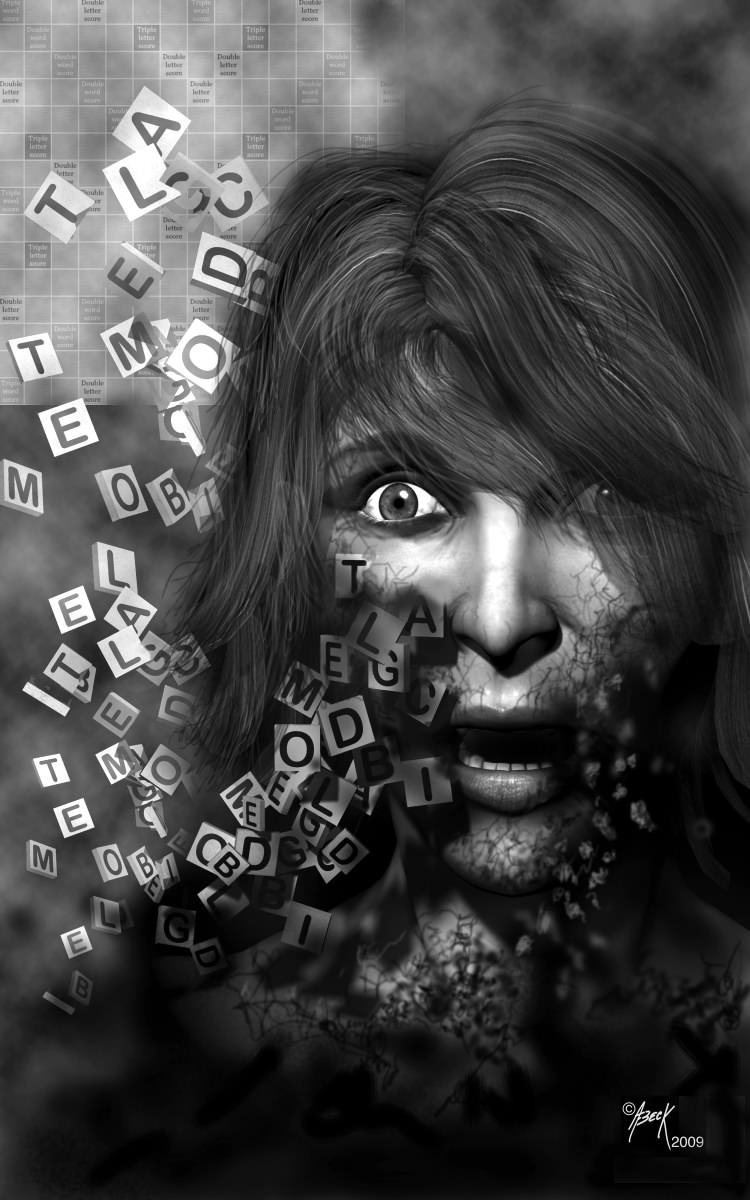
I finally received my copies of issue 109 of Space and Time, and was pleasantly surprised (as well as extremely impressed) to see the artwork done for my story "End of Our World As We Know It." Magazine artwork is always a mixed bag -- the artist sometimes doesn't "get" the story, or because the artist is working on so many projects at once they whip something up quick that has very little to do with the actual story -- but I must say the artwork below is right on the money.

It's by artist Alan F. Beck -- who is a Hugo-nominated artist, which is probably the closest I'll ever come to being associated with a Hugo -- and he was kind enough to give me permission to reprint the art here. Be sure to check out his website for more of his great work.

For those of you celebrating Thanksgiving, enjoy it. For those of you not celebrating Thanksgiving, enjoy that too.