
 Every so often I'll get an e-mail from a writer asking how they too can get their book featured on NPR or reviewed by The New Yorker or The Los Angeles Times or some other equivalent. And every time I respond the same way: have your book traditionally published. It won't guarentee that it'll be featured on NPR or reviewed by The New Yorker, but the book has a much better shot than if it's being self-published. This answer is always met with disappointment, because all the writers who e-mail me asking these questions are self-publishing their books.
I've talked before about the pros and cons of self-publishing vs. traditional publishing, and having your work featured on the radio or reviewed by major magazines is one of the pros of going with a traditional publisher (and here I guess we could have a debate on what constitutes a traditional publisher, because it doesn't just mean the Major Six, but right now let's not worry about that, okay?). They have PR departments whose job is to get your book in the right hands at the right places. That's not so much the case when you do it on your own. Sure, there's always the chance NPR might feature a self-published book or a self-published book might be reviewed in a major magazine, but I wouldn't hold my breath.
It isn't some wild conspiracy either; this is just the way it is. It seems many writers think that major publishers are doing everything they can to destroy them. These writers are constantly playing the blame game. Because no major publisher wanted their book and so they self-published it but it's not selling and so someone has to be at fault, right?
The truth is that even if their book was published by a major publisher, there's no guarantee that it would sell either. I've always found that reasoning faulty, just like with authors whose books did not sell well with traditional publishers and they managed to get their rights back and are doing very well self-publishing the books themselves. They think: I should have done it this way in the first place!
Again, faulty reasoning.
Publishing is such a fickle business. Nobody really knows what sells and why it sells and how long it will sell. That's why when there's a huge success with a particular book (let's use Twilight as an example) the rest of the publishers rush to try to find books similiar so they can ride the wave for as long as they can. But then eventually that wave will die down and it will be another craze and those authors who worked on books similar to Twilight will be screwed.
Recently the New York Times began including e-books on their bestseller list. Some self-published writers have complained that the list isn't accurate, because so-and-so is selling extremely well on Amazon and blah blah blah. Again, this isn't a conspiracy of any kind, but to seriously think that the Times is going to consider a self-published book that's doing well on Amazon is pretty naive.
This all comes down to these authors having their proverbial cake and wanting to eat it too (hence the title of this post). You can't have both. It's that simple. If you want to go and do it yourself for a really high royalty, then you forfeit many important things such as professional editing and cover design and the distribution into bookstores and publicists who will get your book to the right people. If you want to go with a traditional publisher, you'll get most of that, but there are no guarantees you'll end up on NPR or reviewed by The New Yorker, and your book might not sell that well and of the few copies that do sell you'll get a very small royalty ...
You've heard of Amanda Hocking, right? Of course you have. She's one of those indie writers doing extremely well with her e-books. In fact, she's making more money in one month with her e-books than most of us will make our entire lives. Personally, I have no interest in her work, but that's because I'm just not a fan of paranormal romance. I have nothing against her at all and wish her the best of success. I did, however, read a blog post of hers she did at the beginning of the month where she talks about her recent success and how she's really no one special but just someone who worked her butt off and got lucky. The tone and message was the complete opposite of some other hyperbole you see on various blogs, the ones that are prophesying the end of publishing. It really made me respect the girl and what she's doing, because here she is making a shit load of money but is still levelheaded about the business and warning writers that self-publishing is not always the best option.
And I guess that's my main point here: sometimes self-publishing isn't the best option, just as sometimes traditional publishing isn't the best option. It all really depends on your book and what it is you want. But you have to always remember that when you make a decision, you're most likely giving up certain things. That's just the way it is. Unfortunately, you can't have your cake and eat it too. Besides, it's probably not even gluten free.
P.S. Anyone still interested in seeing an early copy of The Calling to read and review, shoot me an e-mail at robert (at) robertswartwood (dot) com. Also, I'm pretty well filled up on the mini blog tour but have a few open dates, so if you'd like to host me, shoot me an e-mail as well.
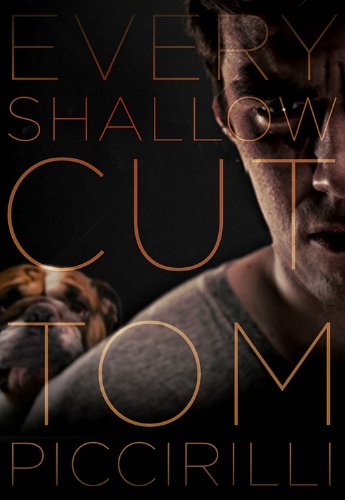 Every hear of auteur theory? It's a film term that basically says a director's films are so unique in the way they're shot and edited and the themes they hold that anyone viewing the film without knowing who the director is beforehand will instantly know. Or something along those lines. The directors are auteurs, the authors of the work. Of course, while there are many fine directors out there, few actually have a distinct style that stand out by themselves.
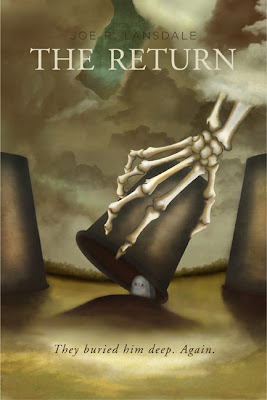 More covers by the University of North Texas graphic design students have been posted at their blog (
 ... until the launch of